Viator

Friday, September 12, 2014

Halloween on the High Seas


Discover treats, tricks, magical mischief and spooky surroundings as you celebrate Halloween on the High Seas! This new experience is available on most itineraries departing late September through Halloween.
Thrills and chills await you at every turn with Halloween-themed parties, lively entertainment and elaborate décor-including an evolving Halloween Tree that eerily transforms throughout your cruise.
Ship Sail Dates
Disney Magic
Disney Wonder
Disney Dream
Disney Fantasy
September 27, 2014 - October 26, 2014
September 26, 2014 - October 31, 2014
September 7, 2014 - October 31, 2014
September 6, 2014 - October 25, 2014
                                                        Halloween on the High Seas Logo Other special experiences include:
  • Mickey's Mouse-querade Party—an atrium party scare-a-bration in addition to Pirate Night—with ghoulish games, trick-or-treating, dancing and some favorite Disney Pals in their Halloween attire
  • Halloween-themed activities for all ages, such as mask-making for kids and pumpkin-carving for teens
  • Tim Burton's The Nightmare Before Christmas Sing and Scream, an interactive movie experience where you're part of the action, followed by a meet-and-greet with Jack and Sally
  • Haunted Stories of the Sea—a campfire-style storytelling experience on the deck
  • Halloween movie marathon to get you in the spirit, shown on Funnel Vision and on the dedicated in-room television channel
  • Halloween Isn't Just for Kids—an adults-only party that includes a costume contest
And more spooky surprises await you onboard!
With so much to see and do, you won't want to miss this Halloween celebration at sea, now offered fleetwide. Be sure to pack your favorite costumes and get ready for happy haunts.
 For more info: www.morethanjustcruises.com or www.disneyvacations.biz

Thursday, September 11, 2014

10 of the world's best nighttime adventures

By Laura Kiniry, for CNN

Some things are just better after dark.
Just because the sun goes down doesn't mean you have to turn in, too.

Swimming with manta rays in Hawaii
The waters off the Big Island of Hawaii's Kona Coast are known for their manta rays: majestic and curious sea creatures with wings that can span up to 20 feet.
After sunset, many area dive companies run boat excursions for both snorkelers and certified divers to get within inches of anywhere from a few to more than a dozen of them.
The water's not completely dark: once you reach your location, operators use either spotlights or equip you with an underwater flashlight to attract the harmless rays by drawing plankton to the area.
The lighting adds to the experience -- illuminating the creatures as they gracefully sway, twist and dive in an extraordinary water ballet around you.
Big Island Divers is one of many reputable companies running year-round night trips for ages 10 and older to both dive and/or snorkel with manta rays.
"All the boats have snorkel guides and large lighted surfboard floats that guests can hold on to," says Big Island Divers' Frank Hendriks.
"Our divers are also guided around the manta ray dive site with their own divemaster, to make sure they are having a great -- and safe -- time while being 30 feet underwater."
Big Island Divers, 74-5467 Kaiwi St., Kailua-Kona, Hawaii; +1 808 329 6068; rates from $99 and include snorkeling equipment and dry towels. Dive gear available to rent

Kayaking Puerto Rico's bioluminescent bay
Mosquito Bay off Puerto Rico's Vieques Island is renowned for its bioluminescence: waters that glow an electric blue and green -- a combination of environment and the tiny luminescent micro-organisms called dinoflagellates that live there.
"We have the brightest luminescent bay in the world," says Barbara Schneider of Abe's Snorkeling and Bio-Bay Tours.
The Vieques-based company runs two-hour kayaking tours to experience this spectacular natural light display.
There's an info session on the bay's unique ecology beforehand.
Despite recent news reports about the bay's loss of bioluminescence, Schneider assures that it's nothing more than an unusual -- and temporary -- occurrence, and the water's have since returned to glowing "really, really bright."
The best time to go is on a moonless night after an especially sunny day, since dinoflagellates collect sunlight during the day and then flash that light as a defense mechanism in the darkness.
Abe's Snorkeling and Bio-Bay Tours; +1 787 741 2134; $45 per adult, $22.50 for kids

More fun than \
More fun than "Jurassic Park."
Night Safari in Singapore
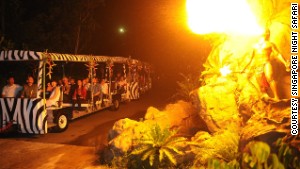
Next door to Singapore's 69-acre zoo is a separate zoo that's home to around 2,500 nocturnal creatures.
The Night Safari includes both a guided, open-air tram ride through the park's seven geographical zones as well as walking trails.
You can wander the zoo's tropical rainforest setting spotting striped hyenas and sloth bears as you go.
There are no cages or walls to deter your view (there are still barriers between you and the animals, they're just hidden), and the lighting is designed to resemble moonlight.
According to Wildlife Reserves Singapore, this May the zoo marked its 20th anniversary with the introduction of two white lions and "two new exhibits featuring Asiatic black bears and Malayan tigers -- the finale to the park's 35-minute tram experience."
Singapore's Night Safari is open 365 days a year, beginning at 7:30 pm.
A couple of live performances -- including a 20-minute Creatures of the Night show highlighting the many behaviors of nocturnal animals -- takes place each evening.
Night Safari, 80 Mandai Lake Road, Singapore; +65 6269 3411; $39 for adults, $25 for kids

Exploring America's most notorious prison
For nearly 30 years, Alcatraz Island in San Francisco Bay was home to one of America's most notorious security prisons.
Approximately 1,500 criminals cycled through this federal penitentiary, including some of the most disruptive men of their time: gangster and crime boss Al Capone; Arthur "Doc" Barker, killed by Alcatraz prison guards during an escape attempt; and Robert "Birdman" Stroud, who spent the first six years of his 17-year sentence in solitary confinement.
In fact, with its tiny bare bones cells, inhospitable grounds and a well-known reputation for housing the worst of the worst criminals (not to mention being a favorite subject of Hollywood directors), Alcatraz has achieved legendary status.
A visit to the island is creepy in the afternoon, but touring the empty prison halls at night is bone-chilling.
"It's an intimate experience compared to daytime," says Alexandra Picavet, public affairs specialist for the Golden Gate National Recreation Area.
Only 700 people are allowed on the island at night, compared to the approximately 5,000-6,000 people that come through each day.
"You also have access to areas -- such as the former hospital -- that are typical off limits," she says.
The Alcatraz Night Tour takes place Thursday through Monday and includes an audio cell house tour, as well as a narrated boat tour around the island.
Due its popularity the night tour is often sold out weeks in advance.
Alcatraz Night Tour, Pier 33, Alcatraz Landing, San Francisco; +1 415 981 7625; $37 per person

Experiencing the ancient ruins of Petra
Located in the desert of southern Jordan, ancient Petra is an architectural marvel of ancient sandstone temples, intricately carved tombs and the elaborate Al Khazneh, an incredible former treasury featured as the final resting place of the Holy Grail in "Indiana Jones and the Last Crusade."
These historic ruins are stunning by day, but become dazzling after dark when the ancient city is awash in the glow of thousands of candles.
A softly lit path through the Siq, or Petra's main entrance, leads to Al Khazneh, where a short performance of haunting Bedouin music and poetry takes place Monday through Wednesday.
"Al Khazneh is Petra's most impressive monument," says Sallah A. Alfaqeer of Petra's Marketing and Tourism Authority.
Petra At Night, Wadi Musa, Petra, Ma'an, Jordan; +962 3 215 7093; takes place Monday, Wednesday and Thursday evenings, beginning at approximately 8 p.m.; tickets cost about $17, in addition to your Petra admission ticket

Granada is teeming with natural and cultural curiosities.
Delving underground in southern Spain's Granada
Granada sits at the foot of the Sierra Nevada mountain range in southern Spain, and the centuries-old city is teeming with natural and cultural curiosities.
Play Granada's Night Adventure Tour brings you in contact with many of them under the cover of darkness.
"Every night is a different tour," says Play Granada manager Elisabetta Aguzzi, "because every guide brings his or her personal touch."
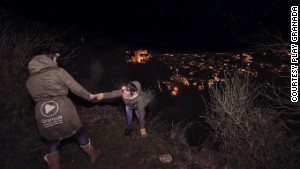
Tours often include visits to the Albayzin (the city's ancient Muslim quarter) and the house caves of Sacromonte, as well as a bit of strenuous climbing -- using nothing but headlamps to guide your way -- that culminates with a fantastic panoramic view of the city.
"Normally, the tour ends in a tapas bar," says Aguzzi.
Each tour lasts three hours, beginning at 6 p.m. in winter and 8.30 p.m. in summer.
Play Granada's Night Adventure Tour, Calle Santa Ana, 2, Bajo 1, Granada, Spain; +34 958 163 684; $27 per person

Immersing in Costa Rica's nocturnal wonders
Well known for its rich variety of wildlife, Costa Rica has as much to offer visitors at night as it does by day.
It's under the cover of darkness that the country's iconic reptiles, birds and animals become really active.
You can meander the Peñas Blancas river by raft on a Twilight Safari Float, listening to the sounds of the jungle and seeking out howler monkeys hanging from tree branches, or embark on a guided night walk through Ecocentro Danaus, a private nature reserve that's home to frogs, birds and sloth.
According to Anywhere Costa Rica travel planner Gema Cantillano, "The forests become louder with insects as dusk sets in, mammals forage for food and nocturnal reptiles hunt for bugs. Expert guides know these patterns and can help visitors gain insight into the rhythms of nature."
Anywhere Costa Rica Ecocentro Danaus Night Walk; +1 310 853 1167; Twilight Safari Float, $60 per person; Ecocentro Danaus Night Walk, $37 per person

Aladdin experience in Dubai
Just outside the glitz and flash of the UAE's most populous emirate lies the expansive emptiness of the desert, where you can experience a traditional Arabic meal and cultural performance beneath the glow of thousands of stars.
Camel rides, temporary henna tattoos and belly dancing are all on offer while you enjoy a buffet barbecue dinner that includes chicken tikka and lamb kabobs.
It's a stunning and remote campsite with low-slung tables, pillows for seats and plenty of shisha (Arabic water pipe) for smoking.
The true beauty of this experience is being so close to Dubai's nonstop action but feeling worlds -- if not centuries -- away.
ABC Tours Acico Business Park, Office No. 901, Port Aeed, Dubai; +971 800 2225

Nightlife as it\'s meant to be.
Nightlife as it's meant to be.
Tracking lion, elephant and rhino in South Africa
South Africa's night game drives offer the chance to experience wildlife viewing in a unique way.
Kruger National Park's night game drives give the chance to spot the Big Five: lion, elephant, buffalo, leopard, rhino.
Most safari companies use open-sided vehicles so there's nothing between you and the animals, getting you as close as possible to the action -- which may include a wandering pack of wild dogs, a whooping pair of hyena or a leopard on the prowl.
There's no guarantee you'll see anything, but the suspense alone is worth it.
Night Game Drives typically begin around 5-6 p.m. and last three hours.
Most often include sundowners stops in the bush for snacks and drinks and to watch the sun set.
Safari Rangers LTD, Henley on Thames, Oxon, UK; + 44 (0) 7540 577725; night safaris in 20-seat open-sided vehicles for about $20 per person

Zip-lining through the snow in Whistler, B.C.
Whistler's Superfly Ziplines offers nighttime zipping in winter.
A heated snowcat transports you to the top of Rainbow Mountain, where you sit down to a multi-course meal (catered by Whistler Village's famed Barefoot Bistro) in a yurt.
Then it's time to descend -- in near total darkness -- on a series of zips through remote stretches of nothing but snow and old growth forest and reaching speeds of up to 62 mph.
"We take heart-pounding, adrenaline-pumping fun to a whole new level," says Superfly's Eric Whittle.
Superfly Ziplines, 211-4293 Mountain Square, Whistler, British Columbia; +1 604 932 0647; nighttime zips with dinner from mid-October to mid-April, $199 per person

Saturday, September 6, 2014

Coming soon? Standing instead of sitting on plane

"How was the flight?" Pretty soon, we may know better than to ask.

STORY HIGHLIGHTS
  • New university study calculates value of standing-room-only cabins on planes
  • Vertical seats could lead to 21% increased passenger capacity and 44% lower ticket prices
  • Airlines such as Ryanair have been touting the concept for years
  • While vertical seat designs have been developed, none have yet been approved for commercial transport
(CNN) -- It's not some miserable dystopic movie scene about class polarization.
The vertical passenger seat -- or "standing cabin" -- may be the next big cost-cutting move in aviation, according to a new report whose author says the concept could be here within five years.
"I stumbled across the idea when I was looking (into) ways to reduce the flight ticket price," Fairuz Romli, who authored the report published in the IACSIT International Journal of Engineering and Technology, tells CNN by email.
Romli, an aerospace engineering professor at the Universiti Putra Malaysia, says his motivation is to lower the cost of air travel to a level competitive with buses and trains.
Using the popular Boeing 737-300 as an example, his study calculates that a standing cabin would lead to a 21% increase in passenger capacity while dropping ticket prices by as much as 44%.
"I'm a frequent flier and most of the times during domestic flights, it feels like the flying time is very short that the aircraft is already descending for landing before you can unfasten your seatbelt after takeoff," he says.


Could, and should, this be replicated in the air? 
Could, and should, this be replicated in the air?
"Hence the big question came to my mind: in such a short duration of flight time, do we really need to sit down?"
Romli quickly discovered that the idea had already been researched -- most notably by Airbus, China's Spring Airlines and Ireland's Ryanair.

The SkyRider (pictured top), developed by Aviointeriors S.p.A. and unveiled at an expo in 2010, is a perching saddle, while Ryanair once flirted with the idea of a "flat-padded backboard" with a seatbelt over the shoulders.
Cost or comfort?
In 2012, Ryanair CEO Michael O'Leary floated the idea with his characteristic bluntness: "The problem with aviation is that for 50 years it's been populated by people who think it's a wondrous sexual experience when it's really just a bus with wings."
However, a spokesperson for Ryanair tells CNN that the airline has since abandoned its vertical-passenger plans.
"We have no plans to trial or introduce standing flights," says the spokesperson.
Hong Kong's Civil Aviation Department voiced caution.
"There are very stringent requirements for the aircraft and the passenger seat to meet before the aircraft or the configuration is certified to carry passengers," a spokesperson tells CNN.
"This novel standing-room design and the mentioned restraint system are early concepts. It may take much time for them to materialize."

Ryanair CEO Michael O\'Leary once flirted with the idea of standing cabins. And charging passengers to use the toilet. The airline hasn\'t followed through with either idea.  

Ryanair CEO Michael O'Leary once flirted with the idea of standing cabins. And charging passengers to use the toilet. The airline hasn't followed through with either idea.
Manufacturers have also expressed doubt about the concept's feasibility.
"We don't believe there are good market opportunities for this idea," says Mark Hiller, CEO of Recaro Aircraft Seating, one of the world's major suppliers of commercial airplane passenger seats.
"From our point of view, passengers will not accept to travel that way. Even if such a seat would pass certification tests, we would see it as a great sacrifice for passengers in terms of comfort and living space, even for very short flights."

Fly, don't ride
Romli, whose report contains some intriguing designs for vertical seats, thinks the concept still has legs.
"The idea seemed to be nixed before it was properly analyzed because I couldn't find any published study about it," he says. "After some initial study, it appears that this is not a bad idea after all and has some potentials to be highlighted."
His study concludes that while savings increase as distances get longer, the concept is best optimized on short-haul flights, with tolerance for standing depending on the age and health of individual passengers.
"I've seen people stand on buses and trains before throughout a journey of maybe close to an hour," says Romli. "So if that's possible, then standing on an aircraft (shouldn't) be a far-fetched idea.
"If the option available to reach my destination is either sitting on a bus or train for six to seven hours or standing for an hour and half on an aircraft, I believe there are many people who would opt for the latter if the flight ticket price is reasonably low."

Romli admits his concept is likely to be greeted with skepticism, not least from aviation safety authorities who would have to sign off on the concept.
Nevertheless, he believes that his vertical seating concept could win approval in five or six years.
"Airlines like to reduce operational costs and given this option, I believe they have a big interest for it as well.
"The only major challenge is to obtain the approval from the aviation authorities and if the concept has proven to satisfy all necessary requirements in terms of passenger safety, there shouldn't be much problem for it to become reality."

Friday, September 5, 2014

The Top Ranked Cruise Lines for 2014

The Top-Ranked Cruise Lines for 2014
The highest marks went to Crystal Cruises.
 
By Miriam B. Weiner

The cruise industry has taken a publicity hit in recent years following some high-profile accidents and ship malfunctions. The subsequent media frenzy has left a lot of travelers wondering whether taking a cruise is a smart idea.

The truth is that now may be the best time to consider a cruise vacation. While airfares and hotel prices are higher than they have been in recent years, cruise prices are lower on average. And the launch of brand-new megaships and new investments in ship safety and amenities make cruising a compelling alternative to a hotel-based vacation.

If you still have reservations about booking a cruise, you are not alone. Choosing the right cruise line, ship and itinerary can be a daunting task. That’s where U.S. News & World Report’s Best Cruises rankings come in. U.S. News ranked 15 major cruise lines based on how their cruises were regarded by travel experts, how they were rated by cruise travelers (using data collected in collaboration with Cruiseline.com) and how they fared in health and safety evaluations by the Centers for Disease Control and Prevention (CDC). The U.S. News team compiled this data for every ship within the 15 cruise lines and determined the best cruise lines in different categories.

Top luxury cruise line: Crystal
 

Cruisers who opt to sail with a luxury line expect one-of-a-kind itineraries, personalized service, plush accommodations and a wealth of onboard entertainment. Two small lines, Silversea Cruises and Regent Seven Seas Cruises, earned high marks from travelers for their intimate atmospheres, excellent cuisine and onboard enrichment programs. Another small cruise line, Crystal Cruises, received the highest overall rating of any evaluated cruise line due in large part to having received the highest ratings among experts and among travelers. The line’s two ships earn praise for offering quality customer service and distinct voyages around the world. Some of Crystal’s onboard restaurants offer cuisine crafted by famed chef Nobu Matsuhisa, many of its staterooms are built with private verandas, and onboard amenities include spas and putting greens.


Top cruise line for the money: Royal Caribbean

Many cruise lines are slashing prices in an effort to raise ship occupancy, but don’t let low rates distract you from ensuring you select a quality company. Those looking to book a family cruise will be happy to know that Disney Cruise Line offers a great value and a bounty of kid-friendly amenities. Meanwhile, travelers looking for the personalized service provided by a smaller vessel will find a bargain by cruising with Celebrity. But neither Disney nor Celebrity could top the value of a Royal Caribbean cruise.

As one of the largest cruise lines navigating the seven seas, Royal Caribbean boasts 22 ships, includingQuantum of the Seas, which will debut in November 2014. The company’s large fleet allows it to carry thousands of passengers per voyage, which permits lower rates. Royal Caribbean’s traveler approval rating of 4 out of 5 proves that it doesn’t sacrifice a quality experience for affordability: Royal Caribbean’s fares cover lodging, dining and onboard activities ranging from youth-focused exploits like swimming and ice skating to enrichment programs like language classes and cooking demonstrations.

Top cruise line for families: Disney

The Best Cruise Lines for families ranking shares the same top three as the Best Cruise Lines for the Money, but in a different order. Celebrity Cruises and Royal Caribbean are highly rated by families with both younger kids and teenagers, even while catering to a diverse set of travelers (including many couples, singles and groups). The No. 1 ranked cruise line for families is Disney, which has the highest ratings among travelers with kids of all ages, according to CruiseLine.com data. The majority of Disney cruisers are (no surprise) families with kids. While on board, children can mingle with their favorite Disney characters and make new friends while participating in Disney’s educational kids clubs. And children and parents can have fun together at theme parties and nightly performances.

Top cruise line for romance: Crystal
 
 
For many, a cruise offers the chance to celebrate a romantic occasion while exploring exotic new locations with that special someone. Crystal Cruises, the No. 1-ranked cruise line for romance, specializes in this. Let the cruise line know if you’re celebrating a milestone like a birthday, an anniversary or a honeymoon and ship staff can take care of the details for you. Crystal Celebrations packages provide a variety of extras to enhance the experience, with treats ranging from Champagne to live music to spa vouchers. Even if you’re not cruising for any particular reason, complimentary in-room wine is an excellent addition to an evening spent on your private balcony, and gourmet cuisine can make dinner on board feel like date night. These romantic amenities make Crystal the highest-rated cruise line among couples. Also landing among the top three, Cunard offers all-inclusive packages designed specifically for weddings or for renewing vows at sea, while Azamara’s two ships offer an exclusive, intimate atmosphere highly rated by couples.

Top cruise line in the Caribbean: Disney


If you’re planning a cruise, odds are you’re heading to the Caribbean. Every one of the 15 lines evaluated for the Best Cruises rankings offers trips to these islands. Royal Caribbean alone is offering more than 1,000 itineraries to the Caribbean between 2014 and 2015. Silversea, a much smaller cruise line, offers fewer itineraries in the region but scored well enough among experts and travelers to join Royal Caribbean as one of the top three cruise lines in the Caribbean.

But the No. 1 spot went to Disney Cruise Line. Although it has fewer Caribbean itineraries than Carnival, Norwegian and Royal Caribbean, Disney’s four whimsical ships receive outstanding reviews from travelers. Disney drops anchor in Barbados, Jamaica, the Cayman Islands and St. Barts, where passengers can explore rainforests, hike volcanoes and peruse local markets. And of course, Disney has its own private Caribbean island. Castaway Cay in the Bahamas is reserved solely for Disney passengers — the island boasts numerous play areas, luxury accommodations, shopping areas and both family-friendly and adults-only beaches.

Book A Cruise Now!

Thursday, October 10, 2013

Attention, travelers: Your plans have changed


Planning to travel in or to the United States and wondering if the U.S. government shutdown will hit your plans?
Well, you may need to tweak some sight-seeing portions of your itinerary. Never mind that visit to the Statue of Liberty in New York City. Forget visiting Independence Hall in Philadelphia. And that hiking adventure at Yellowstone National Park? It won't happen.
Congress, wrangling over spending and Obamacare, failed to renew government funds in time for the start of the new fiscal year on Tuesday, and many travelers -- both domestic and international visitors -- will quickly start feeling the impact of the shutdown.
While rail networks, essential air security and traffic control operations won't be impeded, travelers visiting the country's national parks and other government-run tourist attractions will find the gates shuttered and the doors locked.
All 401 National Park Service sites, which collectively average about 715,000 visitors per day in October, will be closed, according to a park service spokeswoman. (Guests staying in campgrounds and on-site hotels will be given 48 hours to leave.) The Smithsonian's 19 museums and galleries and the National Zoo will also turn visitors away.
In addition to the Smithsonian's National Air and Space Museum, the shutdown bars tourists from two of the world's top destinations for aviation enthusiasts: the National Museum of Naval Aviation in Pensacola, Florida, and the National Museum of the U.S. Air Force at Ohio's Wright-Patterson Air Force Base.
Is it safe to fly?
Airport security personnel are considered essential, so travelers please continue to follow Transportation Security Administration rules about liquids, shoes and other restrictions at the airport.
Air traffic controllers, some safety inspectors and other essential employees will "continue working in order to maintain the safety of the national airspace system," said the Federal Aviation Administration, in an e-mailed statement. "Safety is our top priority."
Most immigration, border and customs employees are also considered essential personnel, which means passport controls at U.S. borders and points of entry like airports and cruise ports -- should be unaffected by the shutdown.
Other FAA projects, including facility security inspections, routine personnel security background investigations and development of the next generation of air traffic control technology, will be placed on hold.
What if you're waiting on a passport?
If you're waiting on a U.S. passport, how long that wait will last depends on where the passport agency is located. Passport services, because they are funded by other revenue, are generally "unaffected by a government shutdown," according to a State Department spokesperson.
There's just one possible catch: If the passport office is located within a government building that has been shut down, passport approvals may be affected.
If you need a visa
Because consular services at U.S. embassies and consulates around the world are largely funded by application fees, not annual appropriations, visa applications filed by foreigners wanting to enter the United States will continue to be processed, according to the State Department.
Overseas impact
Even those visitors trying to pay their respects at American military cemeteries located outside of the United States will feel the impact. The Normandy American Cemetery and 23 other overseas cemeteries operated by the American Battle Monuments Commission will be closed to the public for the duration of the shutdown, according to the commission's contingency plans.
"The Normandy American Cemetery presents a special case, as visitors have access to the cemetery via the unfenced approaches from the beach, according to the plan. "Visitors will be asked to leave, but confrontation will be avoided."

Saturday, September 14, 2013

Another 'ice bar' coming to the high seas


Could a cruise line soon have the coolest nightspot in Miami?
Norwegian Cruise Line says its soon-to-debut Norwegian Getaway, which will be based year-round in the city, will feature an "ice bar" kept at 17 degrees Fahrenheit. Located on deck eight of the 4,028-passenger vessel, the Art Deco-styled lounge will feature South Florida-inspired elements such as South Beach's iconic Ocean Drive skyline and palm trees etched into its icy walls, and a life-size alligator throne made entirely of ice.

The room's bar area, seating and glasses also will be made out of ice. Customers will be given hooded coats and gloves to keep warm during visits. The venue exclusively will serve Svedka vodka and Inniskillin ice wine and be called the SVEDKA/Inniskillin Ice Bar. The outlet is the third of its kind at the line. Norwegian unveiled the first ice bar at sea in 2010 on the 4,100-passenger Norwegian Epic. There's also an ice bar on the line's four-month-old Norwegian Breakaway. A sister to the Norwegian Breakaway, the Norwegian Getaway is scheduled to sail year-round to the Eastern Caribbean out of Miami.

For more info and cruise itineraries check out Expedia CruiseShipCenters New York

Wednesday, June 26, 2013

10 Things Not Miss In Belize


01. The Belize Barrier Reef • For spellbinding natural beauty, it’s hard to beat a snorkeling or diving trip to the Belize Barrier Reef, the longest in the western hemisphere, and where you might see everything from turtles to tropical fish.
02. Toucans • The unmistakable keel-billed toucan is the national bird of Belize and, though found almost anywhere, is best seen in the village of Sittee River.
03. The Museum of Belize • This museum features excellent collections of painted Maya ceramics and jade jewellery. A visit here is one of Belize City’s highlights.
04. The Blue Hole • On Lighthouse Reef, dive the inky depths of the coral encrusted Blue Hole, an enormous circular cavern over 980ft across – or fly over it in a light plane or helicopter.
05. Caracol • The greatest of Belize’s ancient Maya cities is gradually revealing its history and attracting more visitors every year.
06. Tikal • Across the Guatemalan border is the monumental Maya city of Tikal, looming out of a magnificent protected rainforest.
07. Carnival • The music and energy of Carnival in Belize City is the highlight of the “September Celebrations”, which commemorate Independence Day and the Battle of St George’s Caye.
08. San Ignacio • San Ignacio, the adventure centre of western Belize, also has one of the best markets in the country.
09. Lamanal • More than two thousand years ago Lamanai was the largest city anywhere in the Maya world; today, take an exciting riverboat journey to see its massive temples rising out of the jungle.
10. The Mountain Pine Ridge • Hike the hills, peaks and gorges of this vast forest reserve, taking in the majesty of the tallest waterfall in Central America and perhaps staying in a luxurious riverside lodge.

Thursday, May 2, 2013

Frontier to Charge for Carry-on Bags


Low-cost carrier Frontier is rolling out some shocking new ancillary fees. But only certain passengers will be affected.
Yesterday, Frontier announced that it will be charging $100 for carry-on bags; this fee, however, will only apply to passengers who have booked their tickets through channels other than Frontier's website. Further, passengers who didn't buy their tickets through the airline's site will receive only a fraction of standard frequent-flyer earnings.
So if you booked on FlyFrontier.com, you don't have to worry about the $100 bag fee. Additionally, members of the airline's frequent-flyer programs are exempt. But travelers who buy "Basic" tickets, which are sold through online travel agencies like Expedia or Travelocity as well as brick-and-mortar travel agents, will suffer from this new policy.
It gets worse. Frontier is taking away your free Sierra Mist. Those who didn't book directly with the airline, as well as passengers who purchased economy fares (the cheapest fares available on FlyFrontier.com), will be charged $1.99 for drinks.
In a humorous twist, the carrier attempts to paint this as a positive for its customers. According to a statement on the Frontier website, the drink fee will help keep overall fares low. And the new bag fees will "increase overhead space for Frontier's most loyal customers and speed the boarding process for all passengers."
Sure, Frontier's overhead bins will probably get roomier. But—no shocker here—the real reason for these usury fees is revenue. Airlines make more money when customers book directly with carriers instead of going through a provider like Expedia. So if Frontier can to force you to book where it wants you to book, it'll equate to less commission costs that the airline has to pay to third parties.
Frontier made it clear that it doesn't want its customers booking elsewhere when it initiated its first set of penalties last year. Under the guise of "more choice, more perks, and more value," Frontier took away advanced seating assignments and full frequent-flyer mile credits from customers who don't buy directly from the airline.
The new fees kick in this summer. The exact date the carry-on fee kicks in has yet to be announced. We'll keep you posted.
What do you think about Frontier's new policy?

Friday, February 15, 2013

Weary Passengers Disembark Carnival Cruise Ship

Thousands of relieved passengers poured ashore from a stinking cruise ship on Friday after five days adrift in the Gulf of Mexico with overflowing toilets and stench filled cabins. Exhausted passengers lined the ship’s decks, waving towels and flashlights, cheering and singing “Sweet Home Alabama” as tug-boats pulled the stricken Carnival Triumph into the port of Mobile, Alabama. Some travelers kissed the ground when they walked off, others disembarked wearing the ship’s white bath robes, part souvenir and part protection against a chilly night. With only one working elevator, it took several hours to get the more than 4,200 people off the ship, Carnival said. Passengers were greeted dockside with warm food, blankets and cell phones to call family and friends. About 100 buses waited to carry passengers on a seven-hour bus ride to Galveston, Texas, while others buses departed for shorter rides to New Orleans, as well as hotels in Mobile, before eventually flying home.

The end of the saga, documented live on U.S. cable news stations, was another public relations disaster for cruise giant Carnival Corp. Last year, its Costa Concordia luxury liner grounded off the coast of Italy, killing 32 people. Carnival officials said the Triumph, which entered service in 1999, would be towed to a Mobile repair facility for damage assessment. The 893-foot (272-metre) vessel was returning to Galveston from Cozumel, Mexico on the third day of a four-day cruise when an engine-room fire knocked out power and plumbing across most of the ship on Sunday. Passengers described a gut-wrenching stench on parts of the ship and complained to relatives and media by cellphone that toilets and drainpipes overflowed, soaking many cabins and interior passages in raw sewage.

“The stench was awful,” said Robin Chandler, a 50-year-old from Dallas who spent her birthday on the ship. “A lot of people were crying and freaking out.” Jacob Combs, an Austin, Texas-based sales executive with a healthcare and hospice company, praised the ship’s crew. “Just imagine the filth,” said Combs, 30. “People were doing crazy things and going to the bathroom in sinks and showers. It was inhuman. The stewards would go in and clean it all up. They were constantly cleaning,” he said.

APOLOGY

Facing criticism over the company’s response, Carnival Cruise Lines Chief Executive Gerry Cahill boarded the ship to personally apologize to passengers. “I know the conditions on board were very poor,” he told reporters, sounding shaken in a brief media appearance before he boarded the ship. “I know it was difficult. I want to apologize for subjecting our guests to that,” he said. “We pride ourselves with providing our guests with a great vacation experience and clearly we failed in this particular case,” Cahill added. Operated by Carnival Cruise Lines, the flagship brand of Carnival Corp, the ship left Galveston a week ago carrying 3,143 passengers and 1,086 crew. It was supposed to return on Monday.

Some passengers said conditions deteriorated rapidly on the Triumph earlier in the week, saying people were getting sick and passengers had been told to use plastic “biohazard” bags as makeshift toilets. “It wasn’t a vacation anymore it was like survival mode. Eat what you can. Snack when you can. It was awful,” said passenger Tammy Garcia. Smoke from the engine fire was so thick that passengers on the lower decks in the rear of the ship had to be permanently evacuated and slept the rest of the voyage on the decks under sheets, passengers said.

COMPENSATION OFFER

Some passengers said they tried to pass the time playing cards and organizing Bible study groups and scavenger hunts for the children on board the ship. Cahill has issued several apologies and Carnival, the world’s largest cruise company, said passengers will be reimbursed in full plus transportation expenses, a future cruise credit equal to the amount paid for this voyage, plus a payment of $500 a person to help compensate them. Chandler, the passenger, scoffed at the compensation offer. “There are lost wages, I’ve got a baby sitter at home and I had to take off work,” she said. Some passengers said conditions improved on Thursday after a generator was delivered to the ship, providing power for a grill to cook hot food. Passengers said toilets began flushing again on Thursday and the ship served steaks and lobster – a relief after a steady diet of cold sandwiches of cucumber and cheese.

Carnival Corp Chairman and CEO Micky Arison was criticized in January last year for failing to travel to Italy and take personal charge of the Costa Concordia crisis. The tragedy unleashed numerous lawsuits against his company. He has not publicly commented on the Triumph incident. “I think they really are trying to do the right thing, but I don’t think they have been able to communicate it effectively,” said Marcia Horowitz, an executive who handles crisis management at Rubenstein Associates, a New York-based PR firm.

Carnival Corp shares closed down 11 cents at $37.35 in trading on Thursday on the New York Stock Exchange. The Triumph is a Bahamian-flagged vessel and the Bahamas Maritime Authority will be the primary agency investigating the cause of its engine room fire. Earlier this month, Carnival repaired an electrical problem on one of the Triumph’s alternators. The company said there was no evidence of any connection between the repair and the fire. For all the passengers’ grievances, they will likely find it difficult to sue the cruise operator for any damages, legal analysts said. Over the years, the cruise industry has put in place a legal structure that shields operators from big-money lawsuits.

Posted via email from Supreme Clientele Travel

Friday, January 25, 2013

Dancing with the Stars at Sea

Supreme_clientele_travel_danci

Whether you like to Tango, Quickstep, Paso Doble, or sit back and enjoy watching the sizzling performances, the new program offers guests an entirely unique experience on the seas.

“Dancing with the Stars” is one of the biggest television shows on earth, teaming celebrities and professional dancers to compete for the coveted mirror ball trophy. Cruise guests can learn the steps, meet the stars, and join in the fun. Six theme cruises in 2013 and early 2014 will feature “Dancing with the Stars” events including dance lessons; a chance to meet the dancers, ask questions and take photos; and a dazzling production starring celebrities and the famed dance pros, complete with glamorous costumes and routines from the TV show.

Currently scheduled to appear on select sailings are two-time champion pro dancers Mark Ballas and Kym Johnson; pros Tristan MacManus and Lacey Schwimmer; and some of your favorite celebrity competitors.* More dance pros and celebrities to be announced.

In addition to the theme cruises, every sailing on all 15 ships in the Holland America Line fleet will feature an exclusive “Dancing with the Stars” program including dance lessons and an opportunity for some lucky guests to dance center stage in an exciting dance-off performance. These activities will feature the ships' professional dancers and will be developed in collaboration with the show's dancers and choreographers.

For more info and bookings call Supreme Clientele Travel (888)434-7665

Posted via email from Supreme Clientele Travel

Wednesday, January 23, 2013

Exploring Faith on Your Travels

Coexist

World-class museums and historic monuments get top priority from many travelers. But for some of us, there's something equally fascinating -- and sometimes much more so -- about visiting houses of worship, even when they represent beliefs that aren't our own.

"But I'm not into organized religion," you might say. You don't have to be religious to appreciate a visit to a place others consider sacred. Even if you're not specifically seeking the religious aspect of worship, there's something special about thoughtfully witnessing and observing someone else's faith in action. So why not get a spiritual boost by checking out houses of worship when you're on the road?

"A lot of the richness in life comes from getting outside your own skin and experiencing the world beyond what you know and understand. If you open yourself up, you can have such experiences," says Stuart M. Matlins, co-editor with Arthur J. Magida of "How to Be a Perfect Stranger: The Essential Religious Etiquette Handbook." The book shares easy-to-understand background on faith traditions ranging from Baptist to Buddhist, Jewish to Jehovah's Witnesses, Seventh-Day Adventists to Sikhs.

"Typically, the way you are received depends on the way you behave," says Matlins, who also is the founder of Jewish Lights Publishing and SkyLight Paths Publishing. He and wife, Antoinette, co-founded a Reform synagogue in Woodstock, Vermont, where Matlins served as lay spiritual leader for 19 years.

"I've never found a place where I was not welcome. The larger the place, the more likely they are to be welcoming of strangers, whether it's a mosque, a synagogue or a church. That's why I did this book -- if you know the basics of what's going to happen during the worship or the ritual, you're less fearful of embarrassing yourself and intruding in the space of others."

When I'm traveling abroad -- but also when I'm visiting American cities -- I often get up on Sunday mornings and attend some Christian service. I enjoy the religious aspect of worship, but it's also about savoring local culture in one of its most authentic forms. And when you're on the road alone, as I often am, these communal experiences offer the solo traveler a sense of belonging for an hour or two.

When previous reporting jobs took me to Manhattan, I'd go uptown to Harlem to visit Abyssinian Baptist Church, one of the nation's oldest African-American Baptist congregations. And I was hardly alone. Every week, groups of tourists from around the world do the same -- but in such huge numbers that the church specifically addresses first-time visitors by making clear its worship "is not a gospel performance or entertainment of any kind."

Abyssinian now has a tourist entry point where folks must queue for first-come, first-served seats at its 11 a.m. service only. And tourist or not, tank tops, flip-flops and shorts are not allowed.

What's most important to remember, says Matlins, is that even though you're a tourist, visiting a functioning house of worship is not just like walking through a museum.

Regardless of the place's faith tradition, he says, "You're sharing a very special moment with people, and be aware of that. The key thing is to open yourself to the experience so you are not just an observer, even though you are not a participant. You enter a space where you're not participant or tourist, but as one might say, you're in the moment."

But how do you know if worshippers at, say, a Muslim mosque or a Buddhist or Hindu temple will welcome you?

Francis X. Clooney, the director of the Center for the Study of World Religions at Harvard, has found Hindu temples to be fluid places where "smaller and larger rites" take place during the day, not always according to a fixed schedule. But if one is welcomed in, usually one is welcomed for the worship that is in progress."

When in doubt, he suggests "checking in advance, or at least at the door before entering."

Adds Matlins: "If you know people who live in that place, ask them if they can take you to their house of worship, or where they know you would be welcome. I did that in Lahore, Pakistan. I had the same concerns, but we were meeting with someone who was a very religiously involved Muslim.

"I told him of my interest in attending service at a mosque. He said he would be happy to take me." But Matlins has also wandered alone into a Hindu temple in Singapore and Buddhist temples in Japan, which many tourists do.

Of course, it never hurts to do some research before you go, checking out books and websites that offer insight into the cultures and faith traditions you hope to see up close.

For folks seeking out Christian experiences close to home or on the other side of the world, the Mystery Worshipper website offers about 2,000 candid, sometimes tongue-in-cheek reviews of church services around the globe. Its volunteer mystery worshippers drop in and serve up details on everything from sermon length to the comfort of the pews to the warmth of members' welcome.

And it's the friendliness-factor details that give travelers a measure of comfort and behind-the-scenes intel when visiting these places, from massive St. Peter's Basilica in Vatican City to the Grotto of Our Lady of Lourdes in Fiji.

Curious, open-minded travelers also shouldn't let their lack of a personal faith stop them from dropping into houses of worship.

"They don't have to be a gourmet to appreciate a good meal," Matlins reasons. "And you don't have to be a person of faith to appreciate the beauty and passion of a religious experience. It is in a way like theater -- part of the experience is to suspend disbelief, literally."

Thinking about stopping into a living, breathing house of worship on your next trip? Matlins and Clooney suggest keeping these things in mind, regardless of the place's faith tradition:

Be respectful. "You are in a place that is special and holy to other people," Matlins says. "Dress and behave appropriately so you do not disturb their sense of the specialness and holiness of the place."

Pay attention. You want to "be sensitive to what is expected of the visitor -- either to hold back, or to participate more fully," says Clooney. "Being too forward or too passive may both be offensive." Also, "be careful to note where and how far into the space one is welcome. Some areas are more sacred than others."

Follow along. Observe "the customs of the community -- removing shoes, covering heads, the segregation of men and women, talking or not, taking photos or not, in accord with custom," says Clooney.

Listen with your "third ear." "You may not understand the language," says Matlins, "but you can hear the feelings if you open yourself up to them."

Sit in the back. Not only does it keep you from appearing intrusive, but it can minimize any innocent missteps. Suggests Matlins: "Do what you see other people do, unless it violates the tenets of your own faith."

Who knows, perhaps through these spiritual experiences you'll discover what so many travelers find: Despite people's very real differences across nationalities, cultures and faiths, it's what they share in common that matters.

Posted via email from Supreme Clientele Travel

Thursday, January 17, 2013

Fun Ways to Hit The Slopes without Skis

Supreme_clientele_travel_ski

The top ski destinations know that pleasing the downhill crowd is only part of the snow-filled picture.

After all, in the United States alone winter at ski resorts is a $6 billion a year industry, according to the National Ski Areas Association.

Mountain biking, Frisbee, golf and zip line adventures are a few activities popular at ski resorts during the "green" season, but what's a non-skier to do when the landscape is white? If you've had your fill of snowmobiling, sleigh riding and tubing, here's a smattering of extraordinary pastimes for non-skiers at some of the premier U.S. ski meccas.

ALTERNATE ADVENTURES

Snowkiting in Dillon: If you prefer waterskiing to snow skiing, don't shy away from Colorado's triple-threat of Breckenridge, Keystone and Arapahoe Basin ski resorts — even if it's the middle of winter. In a location centrally located to the three ski areas, Colorado KiteForce is replacing downhill thrills with a new winter sport sure to get your adrenaline pumping. It involves a frozen lake, but no ice skates. Instead, strap skis or a snowboard on your feet and let kite power pull you across the frozen tundra of the Dillon Reservoir. It's like windsurfing on the ocean, but with a frosty twist. A two-hour beginner lesson is $175 per person; group rates are available.

Snow biking in Telluride: Mountain bikers flock to Telluride, Colorado, from spring to fall, but there's no reason to stop riding when the snow falls. Local outfitter BootDoctors offers tours on "fat bikes"-- mountain bikes with oversized wide tires that can be ridden on traditional bike trails but excel in the snow. Rentals are $39 per day, including a helmet. Guided Big Tire Bike and Brew trips, which end with a tour and tasting at Telluride Brewing Co., are $99 for a half-day and $149 for a full day.

Newfangled snowshoeing at Lake Tahoe: The option of snowshoeing is nothing new to non-skiers, but at California's Northstar resort, the normally low-key concept is evolving into a competitive sport. Along with tours tailored to families, stargazers and those who want to snowshoe by moonlight, the resort also hosts snowshoe skills and running clinics, a.k.a. intense workouts for the athletes among us. Once you're up to speed in your snowshoes, take part in the Snowshoe Social & Race Series, with upcoming competitions January 27 and March 23.

Winter safaris in Yellowstone: Guests at the Four Seasons Resort in Jackson Hole, Wyoming, may opt for enhanced access to the wildlife of Yellowstone National Park on small-group winter safaris. Five guests at a time can join a wildlife biologist and a naturalist on a four-hour journey tailored to the group's wishes. Gourmet snacks are served inside the Mercedes SUV, and safari riders enjoy the use of Swarovski spotting scopes and binoculars. Included in the price, but not guaranteed: appearances by elk, moose, bears, eagles and bighorn sheep. Cost depends on size of group, starting at $125 per person.

FOOD & BEVERAGE BUZZ

Go gourmet in the Green Mountains: Adventure dining may not be an Olympic sport, but you'll wish it were after you indulge in a five-course feast inside the Killington Ledgewood Yurt in Vermont. It's a unique wilderness retreat accessible only by sleigh and may be the closest you'll come to dining in a Hobbit hole. The yurt's executive chef can cater to special diets upon request, but the regular menu includes signature prime cuts of meat and local New England produce. Alcohol is additional and there are set "family nights" with a different menu and lower rates. Make advance reservations for this Friday or Saturday night adventure; regular Friday night rates start at $109.

Revel in the Rockies: You won't needs skis, snowboards or skates to enjoy the scenery at 10,700 feet, but you will need to take the Zephyr Express chairlift up the mountain to be wowed at Winter Park. The moon lights the way as you rise above the Continental Divide and the spectacular Fraser Valley, en route to an award-winning parade of Colorado culinary delights in the dining room of The Lodge at Sunspot. A three-course Easter brunch is also an option this year on March 31. Rates vary.

Brewing up fun in Breckenridge: If your taste leans more toward choosing small batch bourbon or bitters over green trails or blue, you have reason to head for Breckenridge well beyond the action on the slopes. The awards keep piling up for the spirits made at the Breckenridge Distillery, which bills itself as "the world's highest." A tasting room and tours make this a destination worth checking out -- and here's why it's unique: The bourbon whiskey is made from Rocky Mountain snowmelt, and hand-harvested alpine herbs go into creating the bitters.

COOL CLASSES

All about Alta: Give your brain a break and sit down for a fireside chat with historians, musicians, documentary filmmakers and ski experts brimming with local lore about Utah's Alta Ski Area, celebrating its 75th birthday in 2013. Area ski resorts and the Salt Lake City REI store take turns hosting this popular lecture series run by the Alta Historical Society throughout the winter months. The chats are free and run 45 minutes to an hour. Check out the schedule at www.altahistory.org.

Trade texting for chopping: That's the goal at the Park Hyatt in Beaver Creek, Colorado, where complimentary teen-focused cooking classes are held weekly at the 8100 Mountainside Bar & Grill. Creations include cold weather "mocktails," gourmet pizzas and sushi rolls. Move over Starbucks, here's another perk for parents: There's a class that teaches teenagers the art of making barista-style coffee at home.

School at St. Regis: You may yearn for detention once you enroll in these educational sessions held at the elite St. Regis Deer Valley resort in Park City, Utah. Three clinics are open to resort guests and the public, with instruction on champagne sabering, chocolate infusion and how to create the perfect Bloody Mary. Champagne Sabering 101 is held every night at twilight and this ritual -- where a sword is used to slice off the top of a champagne bottle -- must be seen to be believed. Attend the clinic and bring home a skill sure to impress friends and family at your next gathering. The nightly sabering demonstration and tasting is free, but a private lesson with a sommelier can be had for $250, including a bottle of Charles de Fere champagne. The Bloody Mary and chocolate clinics are held regularly and cost $16 per person.

SNOW SEASON SMARTS

Check with your travel agent, tour operator or hotel if you're on a trip and suddenly decide you've had enough of the slopes. Rules vary by location, and you should always investigate your options. For example, at Sun Valley ski area in Idaho, there's an official lift ticket exchange program that lets you trade in a "downhill" day for a long list of options including a massage, ice skating and lunch or a shopping credit.

Après ski is always an option for skiers and non-skiers alike. One spot to try: Tamarack Lodge atop Heavenly Mountain in Lake Tahoe, California -- where December saw a record-breaking 12 feet of snowfall -- and they're celebrating this lofty designation: Forbes named Unbuckle at Tamarack the No. 1 après ski party in North America.

Do your pre-trip homework beginning with regional tourism board websites for recommendations on museums and music venues. They are generally open year-round and offer constant cultural respite from the chill of the great outdoors. Aspen, Colorado, is one example of a ski spot that doubles as a cultural destination. It's home to museums, concert halls and music venues such as the intimate Belly Up where shows often sell out faster than an expert skier can speed down a bunny slope.

Posted via email from Supreme Clientele Travel

Monday, December 24, 2012

10 weird laws from around the world

Weird laws—from a stiletto ban in Greece to the pinball crackdown in South Carolina—give travel a unique flavor. They're a way for destinations to look travelers square in the face and say, "We do things a little differently around here." We've rounded up 10 surprisingly strange laws from around the world to help you avoid fines, jail or spending your next vacation on the lam.

South Carolina

Illegal: Pinball for minors

If Footloose ever needs a sequel, South Carolina is ready with the plotline. The state allows teenagers to dance (we think), but no one under 18 better shimmy anywhere near a pinball machine. In a place where an old-timey arcade game like pinball is illegal for minors, what's next? Malts? Going steady?

Rome

Illegal: Eating and drinking near landmarks

It's like that time when you were five and spilled ice cream on the rug in the living room, and your mother yelled, "This is why we can't have nice things!" Except substitute Rome for your mom, and imagine the Pantheon instead of a rug. Fed up with drippy picnickers, Rome is now enforcing a municipal ordinance outlawing eating and drinking in areas of "particular historic, artistic, architectonic and cultural value." That Nutella gelato may be amazing, but unless you think it's worth $650, steer clear of landmarks (including the Spanish Steps and the Colosseum) until you're between cones.

Dubai

Illegal: Sharing a hotel room outside of marriage

Significant other. Friend with benefits. These relationship qualifiers are your one-way ticket to separate rooms in Dubai. It's against the law in the United Arab Emirates to share a hotel room with (or live with, for that matter) someone of the opposite sex unless you're married or closely related. On the upside, you won't have to fight over that single luggage stand in the room.

None

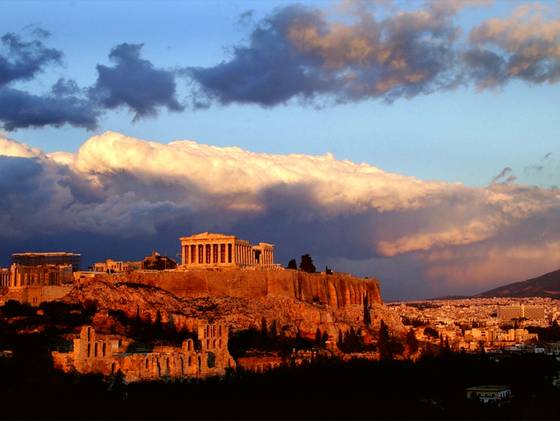
The ancient Parthenon temple, in the Acropolis hill in Greece.(Photo: Petros Giannakouris, Associated Press)

Greece

Illegal: Stiletto heels

Fact: No woman in heels wants to be compared to an elephant. So it's an uncomfortable truth that the pressure a stiletto heel exerts on the ground is much greater than that of a walking elephant. For that reason, Greece is taking a hard line on high heels, with a policy that prohibits shoes that "wound the monuments." The new guidelines will help preserve ancient sites like Athens' Odeon of Herod Atticus for new generations of sensible-shoe wearers.

Netherlands

Illegal: Soft drugs

Because complicated rules and being high go so well together, the Netherlands has come up with an increasingly complex set of policies around smoking "soft" drugs like marijuana and hash. This year, the country introduced a law banning tourists from buying marijuana. Amsterdam, however, is having none of it. The mayor recently announced that Amsterdam will continue to welcome tourists at the city's more than 200 coffee shops, where soft drugs are sold and smoked.

Daytona Beach, Fla.

Illegal: Spitting in public

Daytona Beach wants you to stroll down its sidewalks confident that no stranger's projectile mucous is careening your way. The city's code of ordinance decrees that it does not allow "any person to expectorate upon the streets or sidewalks or in public buildings or places within city limits." So walk tall, secure in the knowledge that you're not going to slip in someone else's spit.

Thailand

Illegal: Stepping on currency

See a penny, pick it up, right? In Thailand, the second verse of the rhyme would go, "And whatever you do, don't step on it. Seriously." Thailand reveres its king—photographs of the monarch are always hung high in a room as a mark of honor and respect, and it's illegal to criticize the king. Since his likeness is on all currency, stepping on money is akin to stepping on the king's face. So, clearly: not cool.

Venice

Illegal: Feeding the pigeons

You know what would be great? If Venice could outlaw pigeons. Since it can't do that, the city has instead cracked down on those who feed the birds. The new law ends a long tradition of pigeons landing on tourists who are willing to exchange some avian bacteria for a photograph or two.

Canada

Illegal: Penny overuse

Poor Canadian piggy banks, straining under the weight of all those unusable pennies. Across the provinces, it's illegal to use more than 25 pennies in a transaction—something to remember next time you're trying to use up all your Canadian currency at the end of a vacation. Need more proof that the penny is Canada's most unloved tender? The government announced earlier this year that it would soon begin phasing out the one-cent coin.

Singapore

Illegal: Chewing gum

Unless you're blowing those bubbles under a doctor's orders, you're in violation of Singapore's strict ban on chewing gum. If you're thinking that you'll just sneak some in to chew in the privacy of your hotel room, know that smuggling gum into the country is a serious offense as well. We can only imagine that this granddaddy of weird laws has inspired a thriving industry of mint manufacturers.

Posted via email from Supreme Clientele Travel

Preparation Tips for Going On Vacation

Supreme_clientele_travel_trave

Typical vacation planning involves selecting the right hotel, making flight arrangements and purchasing tickets for events and attractions. While the dizzying array of vacation options can keep you focused on your trip, it’s also important to prepare your home for your time away. Before heading off to your destination, you want to make sure everything will run smoothly in your absence so you can really leave home behind while you're relaxing and rejuvenating. Keep your family, friends and coworkers at bay during your trip by including advance planning on your to-do list, before your vacation has begun.

Step 1

Make arrangements for pets, plants and mail. If you are leaving pets at your house to be tended to, have your pet sitter water the plants and pick up the mail. You can also use Aqua Globes or other types of devices that will water your plants in your absence. If you won’t have anyone tending to the house, contact the U.S. Postal service to arrange to have your mail held until you return.

Step 2

Take advance care of family members you are leaving behind. If you are leaving children or a spouse at home, make sure they have everything they might need while you’re gone. Freeze a few favorite casseroles to give them a taste of your cooking even while you’re away. Leave a photo of yourself with small children, who will be reassured by seeing your face each day. Leave detailed instructions with your caregiver for everything from snack preferences to bedtime routines to minimize disruptions.

Step 3

Tie up loose ends at work. Set up an away message for your e-mail and voice mail, giving your return date and the names and numbers of coworkers who can be contacted in your absence. Give a copy of important files to a contact in your department who can act on your behalf while you're away. Place other information that coworkers might need in brightly colored, clearly labeled files on top of your desk so they don't need to rummage through your drawers. A short list of the contents of each folder will encourage coworkers to replace anything they remove or copy, and also ensure you can tell if anything's missing when you return.

Step 4

Send out an itinerary and instructions for reaching you. Let your family know where you will be at all times. Give them flight numbers, hotel names and addresses and a rough schedule of your activities. Arrange for a way for them to reach you in the event of an emergency. Make sure they have the phone numbers for the places you're staying as a backup to your cell phone number. If you will be hiking or camping, schedule regular check-in times for calling your family.

Step 5

Set up payment for bills that are due while you’re away. The last thing you want to come home to is a disconnection notice or unexpected late fee. Most bills can be scheduled online for payment on the appropriate day. If you cannot schedule bill payment for while you’re gone, pay the bill early.

Step 6

Clean out the refrigerator. Toss out leftovers as well as any items that will expire before you return. Limit your grocery shopping in the weeks leading up to your vacation to the bare essentials. Keep the ingredients for at least one or two meals in the freezer so you won’t have to go on a last-minute shopping trip as soon as you get home.

Step 7

Purchase timers for three or four lights throughout the house and set them to go off at various intervals. This will help the house look lived in while you’re away. You should also arrange for a friend or neighbor to mow the lawn if you will be gone for an extended period of time, as an unkempt yard is a big indicator for burglars that a house may be unattended.

Supreme Clientele Travel

Posted via email from Supreme Clientele Travel

Friday, December 21, 2012

Tips on How To Save On A Cruise

Cruise-logos

The high cost of a dream cruise vacation can leave you feeling a little queasy before you even set sail. (And let's not mention the add-ons!)

Here's some sage advice about how to save big before boarding.

Book early

By reserving six to 12 months ahead of your cruise, you can lock in an early-bird rate that's 25 to 50 percent lower than the published "brochure" rate most lines advertise. You'll also have a wider selection of itineraries, dates and cabins, and possibly get better deals on airfare and hotels. If prices go down after you book, a good travel agent -- or the cruise line itself -- should help you get the new lower rate.

Or book late

Yes, it runs completely counter to what we just said about booking early, but if you wait 60 to 90 days before you want to sail, cruise lines often drop prices significantly to fill any remaining spaces on their ships. If you're willing and able to white-knuckle it, this is when you can nab a weeklong Caribbean cruise for under $500. But of course, you won't have as much choice of itinerary or cabin, it may be tricky to find a low airfare to your port, and last-minute fares are typically nonrefundable.

Request a discount

Asking the right questions can work magic. If you're a return customer, mention it when booking and politely inquire whether you're eligible for a discount -- it can shave 5 to 15 percent off your fare. Since cruise prices are based on double occupancy, a third or fourth person in your cabin should get a 30 to 60 percent discount. If you're 55 or older, don't be shy about asking for a 5 percent discount; likewise, active and retired servicemen and women should always ask if the line offers them savings.

Use a travel agent

Sites like Kayak and Expedia have put you in the driver's seat -- sometimes literally -- but don't underestimate the role a good agent can play in finding you the right deal. Many have reserved spaces they can sell you at a discount, and they can explain whether an advertised "free" upgrade or all-inclusive package is for real or just a ploy. They can also advocate for you if rates drop after you've booked your cruise.

Go big

Large groups -- like family reunions at sea -- can be complicated to pull together, but they can also knock big bucks off the price of cabins. A group of 16 people in eight cabins, for instance, can sometimes get a steep discount on the 16th fare, or in some cases a free berth. For large groups, booking a year in advance is advised to ensure you get the block of cabins you want.

Try shoulder season

You won't save a ton, but sailing when most folks stay home can nab you a modest bargain -- maybe 10 percent off typical high-season rates. Here are the best times to find deals in four highly popular cruise regions:

Caribbean: September and October, the non-holiday weeks in December, and early January to Presidents' Day.

Europe: Mid-March and April, September to December

Alaska: May and September

Bermuda: April and October


Royal Caribbean    Norwegian Cruise Line   Regent Seven Seas Luxury Cruises    Cruise Deals

Posted via email from Supreme Clientele Travel